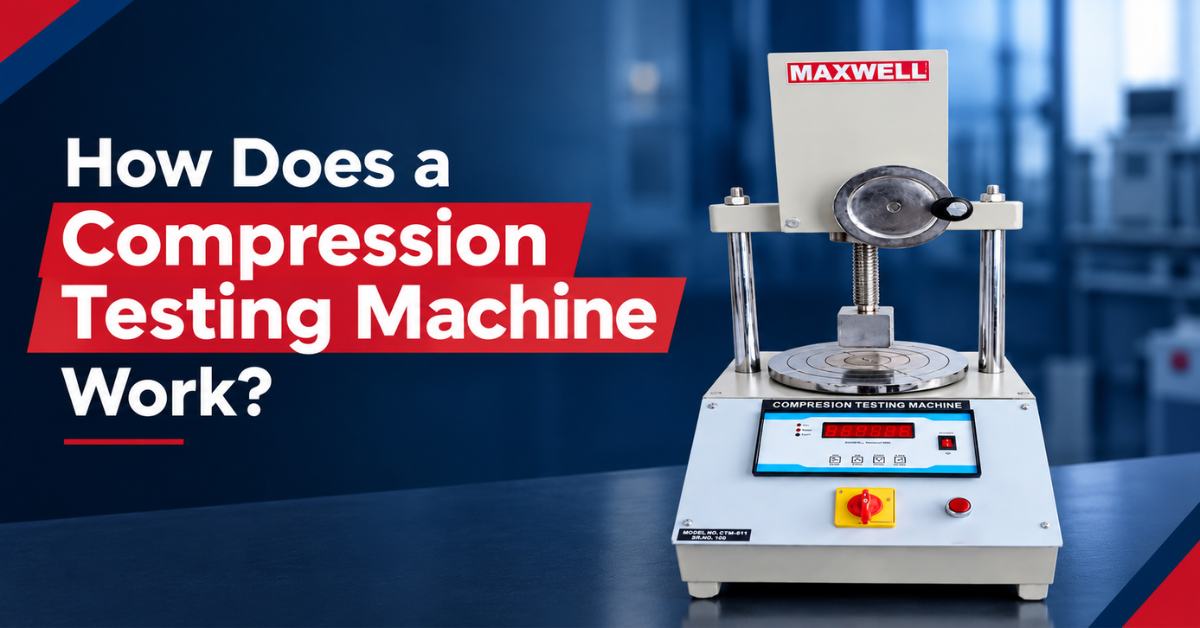
Not every material fails the same way. Some stretch and eventually snap under tension. Others do the opposite — they get squeezed, and at some point they crush, buckle, or lose their shape entirely. Figuring out exactly how much force a material or component can take before that happens is the whole job of a compression testing machine, and it’s one of those instruments that quietly sits at the center of mechanical and material quality testing.
Whether the job at hand is checking insulating materials, plug and socket components, or engineering materials like metals and plastics, knowing how a compression testing machine actually works makes it a lot easier to trust the numbers it gives you — and to pick the right machine in the first place.
What Is a Compression Testing Machine?
Simply put, a compression testing machine applies a controlled compressive force to a material or component and records how it reacts. That reaction could be the load it survives before deforming, the exact point where it fails outright, or just a confirmation that it holds its shape under a defined amount of pressure.
Depending on where it’s used, this could mean testing:
- Insulating materials and electrical accessories for compression resistance
- Plugs, socket outlets, and similar parts as part of safety compliance checks
- Engineering materials such as metals, plastics, and composites for compressive strength
Different applications, same basic idea — push force into the specimen in a measured, controlled way, and watch how it responds.
How Does a Compression Testing Machine Actually Work?
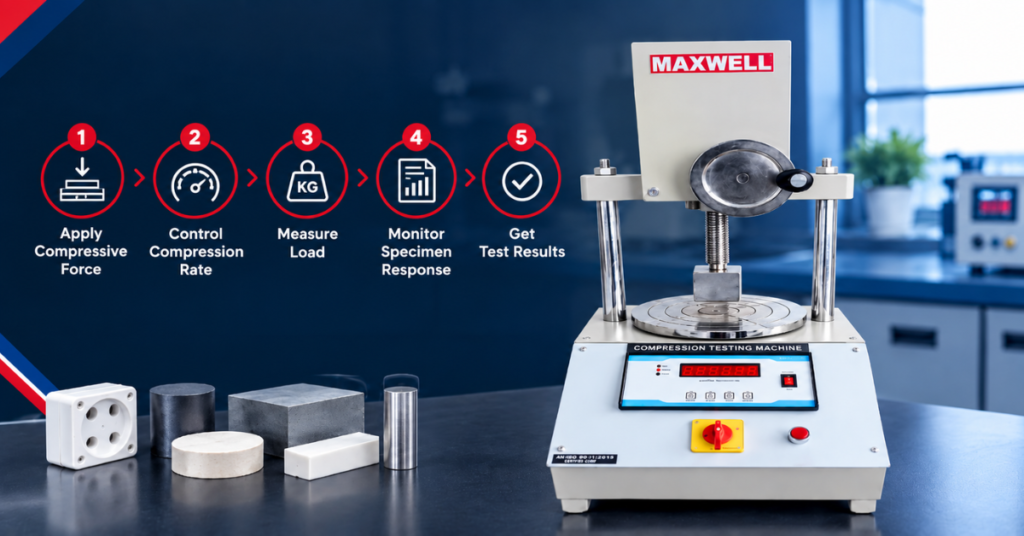
Applying the Compressive Force
The specimen sits between two platens, usually a fixed base at the bottom and a moving compression head above it. Force is applied vertically, gradually squeezing the specimen between the two.
Depending on the machine’s design, that force can come from a motorized geared drive for smooth, repeatable movement, or from a hydraulic system when higher capacity is needed.
Keeping the Compression Rate Under Control
The speed at which force builds up matters more than people often assume — compress a specimen too fast, and the result can shift noticeably compared to a slower, steadier load. A properly built compression testing machine lets you control that rate, so the force ramps up smoothly rather than in sudden jumps.
Measuring the Load as It Builds
While the platens do their work, a load cell (or similar sensing mechanism) tracks exactly how much force is being applied at any given moment. This is what gives you a real-time picture of the load the specimen is actually experiencing.
Watching How the Specimen Responds
Through the test, the specimen is being watched for how it holds up. Sometimes that just means checking it hasn’t deformed. Other times it means measuring how much it’s compressed under a given load, or — in destructive tests — letting the machine keep going until the specimen actually fails.
Reading Off the Result
At the end, the machine shows the outcome — pass/fail against a defined compression resistance requirement, or a full digital readout of load and displacement, depending on what the test calls for.
Different Types of Compression Testing, Depending on the Application
Testing Electrical Accessories and Insulating Materials
In electrical manufacturing, compression testing checks whether plugs, socket outlets, and insulating materials can take a compressive load without deforming or breaking down mechanically. This is usually done on a dedicated compression test apparatus with a precision vertical compression assembly — built specifically for electrical accessories, as part of quality control and compliance testing under applicable IS and IEC standards.
Testing Engineering Materials
For broader material work — metals, plastics, composites — compression testing is more commonly done on a Universal Testing Machine (UTM), which handles both tensile and compressive loads. A UTM usually comes with interchangeable load cells, so the same machine can cover different specimen sizes and material strengths without needing separate equipment for each.
Why Bother With Compression Testing at All?
Compression resistance isn’t just a number on a datasheet — it has real consequences for how a product performs once it’s out in the world.
- Mechanical failure prevention — a component that deforms or cracks under ordinary handling loads is a component that’s going to fail early
- Electrical safety — a plug or socket that loses its shape under compression can end up exposing live parts or losing proper contact
- Compliance — a lot of product standards specifically require compression resistance to be verified before certification is granted
- Material validation — engineers rely on compression data to confirm a material can actually handle what its application demands
Where Compression Testing Machines Get Used
- Electrical accessory manufacturing — checking plugs, sockets, and insulating parts for compression resistance
- Compliance and QC labs — confirming products meet IS and IEC requirements ahead of certification
- Material testing labs — measuring compressive strength across metals, plastics, and composites
- R&D teams — testing new component or material designs before they go into production
- Production inspection — routine batch checks to keep quality consistent
What to Actually Look For When Buying One
Application fit
Figure out first whether you need a dedicated compression test apparatus for something specific — like electrical accessories — or a more flexible Universal Testing Machine that can handle several material types and test modes.
Load capacity
The machine’s range needs to comfortably cover what you’re actually testing. Too small, and you’re limited; too large, and you lose precision on smaller loads.
Drive and control
Motorized systems with a geared compression mechanism tend to give smoother, more controllable force application — which translates into more consistent results test after test.
Build quality
Look for a heavy-duty, stable build — stainless steel or something equally rigid — so the machine holds its accuracy through repeated daily use.
Standards compliance
Make sure the machine is actually suited to whatever standard your product needs to meet, whether that’s IS/IEC requirements for electrical parts or a relevant material testing standard.
Display and usability
A clear digital display with straightforward controls cuts down on misreads and speeds up testing when you’re running the same check over and over in a busy QC setup.
Compression Testing Machines at Maxwell
Maxwellindia manufactures a Compression Test Apparatus built specifically for evaluating the compression resistance of plugs, socket outlets, insulating materials, and electrical accessories — featuring a heavy-duty stainless steel body, a precision vertical compression mechanism, and motorized or manual operation depending on the model, suited for laboratory, QA/QC, and R&D use under applicable IS and IEC standards. For broader material testing needs, Maxwell’s Universal Testing Machine (UTM) handles both tensile and compression testing across a range of materials, with interchangeable load cells to match different testing requirements.
Conclusion
At its core, a compression testing machine does something fairly simple — apply force, watch how the material responds — but what comes out of that test genuinely matters for safety compliance and material selection alike. Whether it’s confirming a socket outlet holds its shape under pressure or checking the compressive strength of an engineering material, picking a machine that actually matches your application, load range, and standards requirement is what makes the results worth trusting.
Frequently Asked Questions
1. What does a compression testing machine measure?
It measures how a material or component responds to a controlled compressive force — whether it deforms, holds its shape, or fails under a given load.
2. What’s the difference between a compression test apparatus and a UTM?
A compression test apparatus is usually built for one specific application, like testing plugs, sockets, or insulating materials. A UTM is more versatile and can run both tensile and compression tests across a wider range of material types.
3. Why does compression testing matter for electrical accessories?
It confirms that plugs, sockets, and insulating parts can take compressive force without deforming or failing — which is essential for keeping electrical connections safe and intact.
4. What standards apply to compression testing of electrical components?
Generally, it’s done as per applicable IS and IEC standards relevant to whatever product category is being tested.
5. Can one compression testing machine handle different materials?
A dedicated compression test apparatus is typically built for a specific use case, like electrical accessories. For a wider range of materials — metals, plastics, composites — a Universal Testing Machine with interchangeable load cells is the better fit.