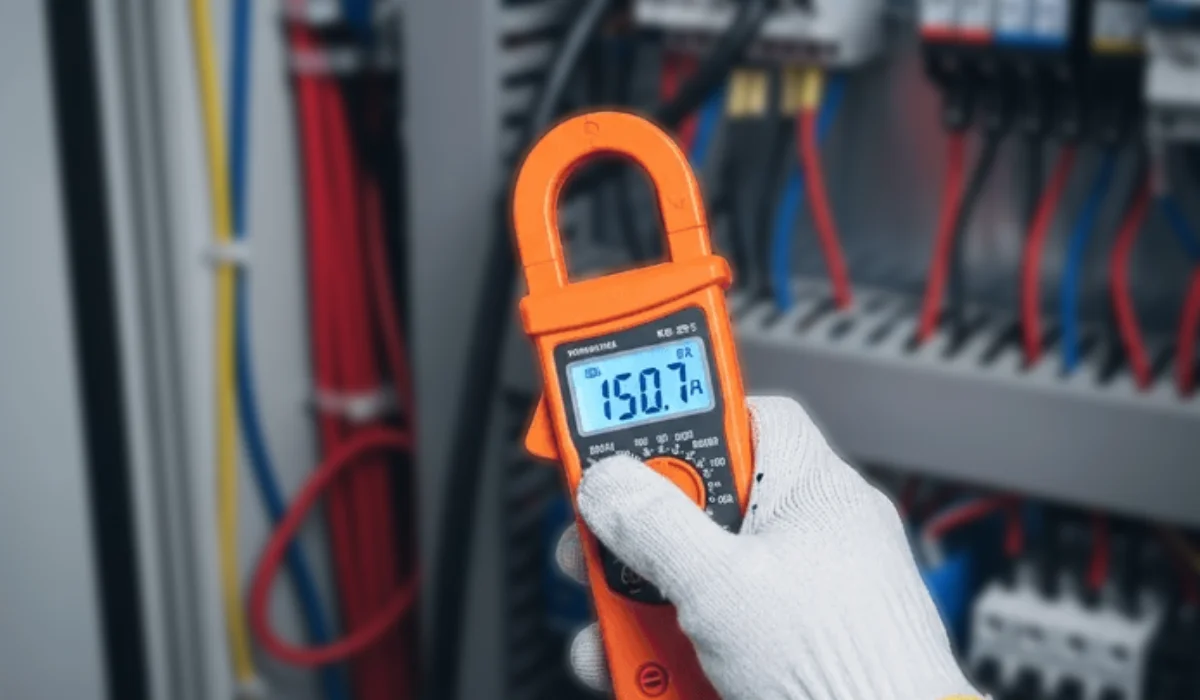
Ampacity of a Wire / Cable: Meaning, Factors, Standards, and Practical Considerations
In electrical engineering and power systems, one of the most critical yet often misunderstood parameters of a wire or cable is its ampacity. Whether you are designing an electrical panel, selecting cables for an industrial installation, testing power cables in a laboratory, or manufacturing conductors, understanding ampacity is essential for safety, reliability, efficiency, and compliance with standards.
Incorrect ampacity selection can lead to overheating, insulation failure, fire hazards, voltage drop, reduced cable life, and non-compliance with regulatory standards. On the other hand, oversizing cables unnecessarily increases material cost, weight, and installation complexity.
This blog provides a complete and practical explanation of ampacity of a wire or cable—what it means, how it is determined, which factors influence it, how standards define it, and how ampacity is tested and applied in real-world scenarios.
What Is Ampacity?
Ampacity is defined as:
The maximum continuous current, in amperes, that a conductor can carry under specified conditions without exceeding its allowable temperature limit.
In simple terms, ampacity tells us how much current a wire or cable can safely carry without overheating.
Ampacity is not a fixed value. It depends on:
- The conductor material
- Insulation type
- Ambient temperature
- Installation method
- Cooling conditions
- Permissible temperature rise
That is why the same conductor size can have different ampacity ratings in different applications.
Why Ampacity Is Important
Ampacity plays a critical role in multiple aspects of electrical systems:
1. Electrical Safety
Exceeding the ampacity causes excessive heating, which can:
- Damage insulation
- Lead to short circuits
- Create fire hazards
2. Cable Life and Reliability
Operating cables above their temperature rating accelerates thermal aging, reducing insulation life drastically.
3. Compliance With Standards
National and international standards mandate specific ampacity limits for different cable types and installations.
4. Energy Efficiency
Excessive current increases I²R losses, leading to:
- Higher power losses
- Reduced system efficiency
- Increased operating costs
Basic Principle Behind Ampacity
Ampacity is governed by heat balance.
When current flows through a conductor:
- Heat is generated due to resistance (I²R loss)
- Heat is dissipated to the surrounding environment
Ampacity is reached when heat generated equals heat dissipated, without exceeding the maximum allowable conductor or insulation temperature.
If current increases further:
- Heat generation exceeds dissipation
- Conductor temperature rises uncontrollably
- Insulation degrades
Factors Affecting Ampacity of a Wire or Cable
Ampacity is influenced by multiple interacting factors. Understanding these is essential for correct cable selection.
1. Conductor Material
The most commonly used conductor materials are copper and aluminium.
Copper Conductors
- Lower electrical resistivity
- Higher current carrying capacity
- Better thermal conductivity
- Smaller cross-section required for same current
Aluminium Conductors
- Higher resistivity than copper
- Lower ampacity for the same size
- Lighter and cheaper
- Requires larger cross-section to match copper ampacity
For the same cross-sectional area:
- Copper cables have higher ampacity than aluminium cables
2. Conductor Size (Cross-Sectional Area)
Ampacity increases with conductor size because:
- Larger area → lower resistance
- Lower resistance → less heat generation
Cable sizes are commonly specified in:
- Square millimeters (mm²)
- AWG (American Wire Gauge)
Example:
- A 2.5 mm² copper cable has lower ampacity than a 10 mm² copper cable under identical conditions.
3. Insulation Material and Temperature Rating
Insulation determines the maximum permissible operating temperature of the cable.
Common insulation types include:
- PVC (70°C or 90°C)
- XLPE (90°C continuous, 105°C or higher for special grades)
- Rubber (EPR, silicone, etc.)
Higher temperature-rated insulation allows:
- Higher ampacity
- Higher permissible conductor temperature
For example:
- An XLPE-insulated cable has higher ampacity than a PVC-insulated cable of the same size.
4. Ambient Temperature
Ampacity values are usually specified at a reference ambient temperature (commonly 30°C or 40°C).
If ambient temperature increases:
- Cooling becomes less effective
- Ampacity must be derated
If ambient temperature decreases:
- Higher ampacity may be allowed
Standards provide temperature correction factors for different ambient conditions.
5. Installation Method
Installation has a major impact on heat dissipation.
Common installation methods:
- Free air (open air)
- Conduit
- Cable tray
- Buried underground
- Enclosed in thermal insulation
Cables installed in free air:
- Dissipate heat easily
- Have higher ampacity
Cables installed in conduits or underground:
- Restricted heat dissipation
- Lower ampacity
6. Grouping of Cables
When multiple cables are installed together:
- Heat from one cable affects others
- Overall temperature rises
- Ampacity must be reduced
This is known as grouping or derating factor.
Standards specify derating factors based on:
- Number of cables
- Spacing between cables
- Installation method
7. Type of Current (AC or DC)
- DC current causes uniform heating
- AC current causes skin effect and proximity effect, especially at higher frequencies
These effects increase effective resistance and reduce ampacity for large conductors carrying AC.
8. Permissible Temperature Rise
Different applications allow different temperature rises:
- Power cables
- Instrumentation cables
- Flexible cords
- Fire-resistant cables
The allowable temperature rise directly impacts ampacity.
Ampacity vs Current Rating vs Carrying Capacity
These terms are often used interchangeably, but technically:
- Ampacity: Maximum continuous safe current
- Current rating: Manufacturer-specified current under defined conditions
- Current carrying capacity: General term describing current capability
Ampacity is the most standardized and safety-oriented term.
Ampacity as Per International Standards
Ampacity values are not arbitrary; they are defined and calculated as per established standards.
IEC Standards
IEC standards widely used in India and globally include:
- IEC 60287 – Calculation of current rating of cables
- IEC 60502 – Power cables with extruded insulation
- IEC 60364 – Electrical installations
IEC ampacity calculations consider:
- Thermal resistances
- Cable construction
- Soil thermal resistivity (for buried cables)
- Installation conditions
IS (Indian Standards)
Indian standards derived largely from IEC include:
- IS 3961 – Current ratings of cables
- IS 1554 – PVC insulated cables
- IS 7098 – XLPE insulated power cables
IS standards specify:
- Reference ambient conditions
- Correction factors
- Test methods for heating and current carrying capacity
NEC (National Electrical Code – USA)
NEC defines ampacity tables based on:
- Conductor size
- Insulation temperature rating
- Installation method
Though NEC is US-specific, it is often referenced globally.
Ampacity Tables
Ampacity tables provide ready-to-use current ratings for standard cable sizes under defined conditions.
Typical assumptions:
- Ambient temperature: 30°C
- Single cable
- Free air or standard conduit
- Specific insulation type
When conditions differ, derating factors must be applied.
Derating Factors in Ampacity Calculation
Derating ensures cables operate safely under non-standard conditions.
Common derating factors include:
- Ambient temperature correction
- Grouping correction
- Installation correction
- Soil thermal resistivity (for underground cables)
Final allowable ampacity is calculated as:
Adjusted Ampacity = Base Ampacity × Derating Factors
Ampacity for Flexible Cables vs Power Cables
Flexible cables:
- Use fine-stranded conductors
- Have different thermal characteristics
- Often have lower ampacity than solid conductors of same size
Power cables:
- Designed for continuous operation
- Higher insulation thickness
- Better thermal endurance
Ampacity in High-Current Applications
In applications such as:
- Transformer secondary connections
- Busbar connections
- Battery testing
- Cable testing laboratories
Ampacity must be evaluated carefully considering:
- Short-time current withstand
- Temperature rise limits
- Contact resistance
- Cooling arrangements
Short-Circuit Current vs Ampacity
Ampacity refers to continuous current, not short-circuit current.
Short-circuit current:
- High magnitude
- Very short duration
- Limited by thermal and mechanical withstand
Cables must be designed to withstand both:
- Continuous ampacity
- Short-circuit thermal stress
Ampacity Testing of Cables
Ampacity is validated through type tests and routine tests.
Typical ampacity test setup includes:
- Supplying rated current
- Measuring conductor temperature
- Monitoring insulation temperature
- Ensuring steady-state conditions
Standards specify:
- Test duration
- Temperature measurement methods
- Acceptance criteria
Common Mistakes in Ampacity Selection
Some frequent errors include:
- Ignoring ambient temperature
- Not applying grouping derating
- Using free-air ampacity for enclosed installations
- Confusing short-term current with continuous current
- Oversimplifying cable size selection
Avoiding these mistakes significantly improves system safety.
Practical Example
A 10 mm² copper XLPE cable may have:
- Base ampacity: 65 A (at 30°C, free air)
If:
- Ambient temperature is 45°C
- Three cables are grouped
After applying correction factors:
- Allowable ampacity may reduce to ~45–50 A
This highlights why real-world ampacity is often lower than table values.
Ampacity in Testing and Quality Control
In cable testing laboratories and manufacturing:
- Ampacity verification ensures compliance
- Temperature rise tests validate design
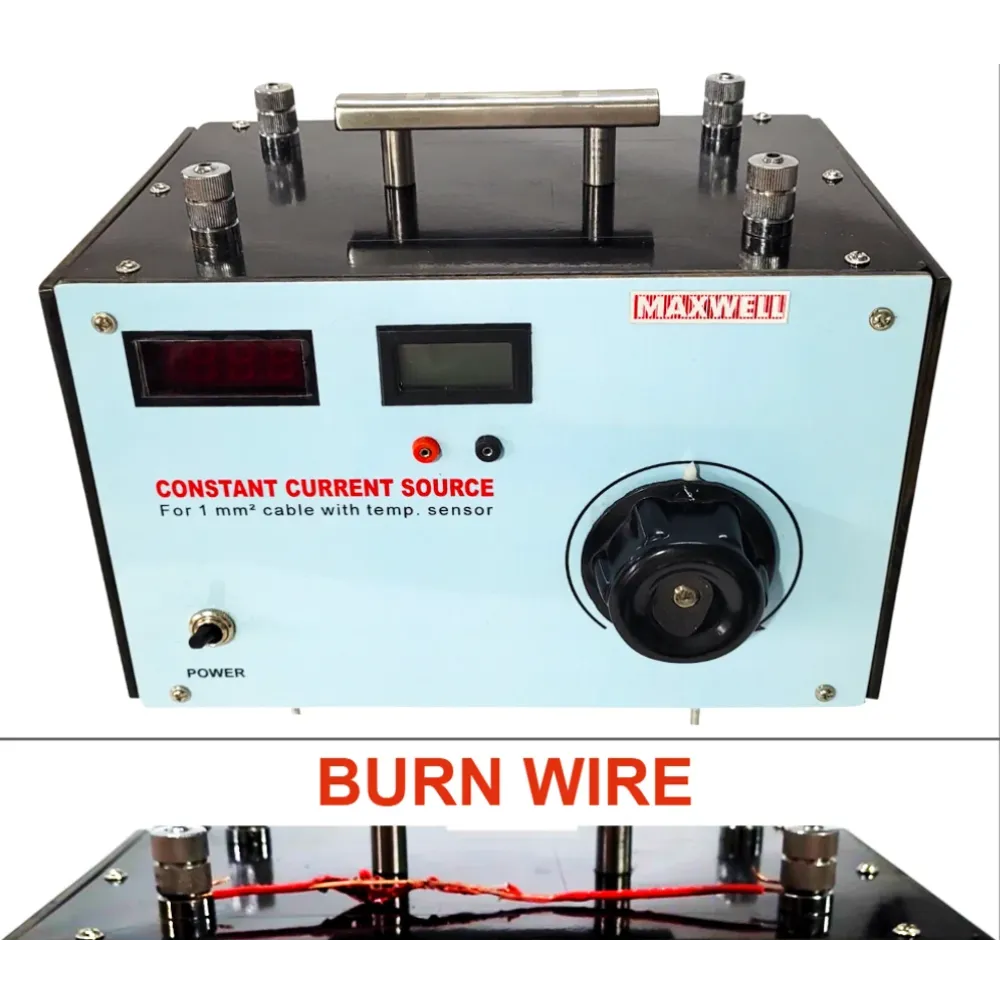
- Accurate current sources and measurement instruments are critical
Reliable ampacity testing supports:
- Product certification
- Customer confidence
- Regulatory approval
Conclusion
Ampacity is far more than a number in a table—it is a fundamental safety and design parameter that reflects the thermal behavior of a wire or cable under real operating conditions.
To select the correct ampacity:
- Understand conductor and insulation properties
- Consider installation and environmental factors
- Follow applicable IS, IEC, or NEC standards
- Apply appropriate derating factors
- Validate through proper testing
A clear understanding of ampacity helps engineers, manufacturers, and testers design safe, efficient, and compliant electrical systems—whether for domestic wiring, industrial power distribution, or advanced cable testing applications.