In this post, we explain how a standardized laboratory test — under ASTM D2843 (and for India, IS 13360-6-9) — provides a reliable, repeatable way to measure smoke generation from plastics, cable materials, and polymeric products, and why such data matters for manufacturers, safety-compliance bodies, and end-users. We also walk you through what is measured in Smoke Density Test, how the test is conducted, and how you can use smoke-density test results to inform safety conscious decisions.
Smoke is often the silent killer in fires — and for cables, plastics and polymer-based materials, the amount of smoke generated during combustion is a critical safety parameter. Fire safety is not just about flame resistance: heavy smoke can obscure visibility, block evacuation routes (exit signs), and cause inhalation hazards. That’s why measuring smoke density — i.e. how much smoke is produced under fire conditions — is vital.
Smoke Density Test for Cables and Plastics – ASTM D2843 Explained
When a fire breaks out, the biggest threat to human life is often not the flames, but the smoke. Thick, dense smoke can block visibility, damage lungs, prevent safe evacuation, and cause panic in enclosed places like buildings, tunnels, ships, factories, and public transport.
This is why Smoke Density Testing is an essential part of modern fire safety standards for cables, plastics, and polymer materials. Most common standards used worldwide are:
- ASTM D2843
- IS 10810 (Part 63) for cable testing in India (Also known as 3 meter cube)
- IS 13360-6-9
Why Do You Need to Test Smoke Density of a Cable?
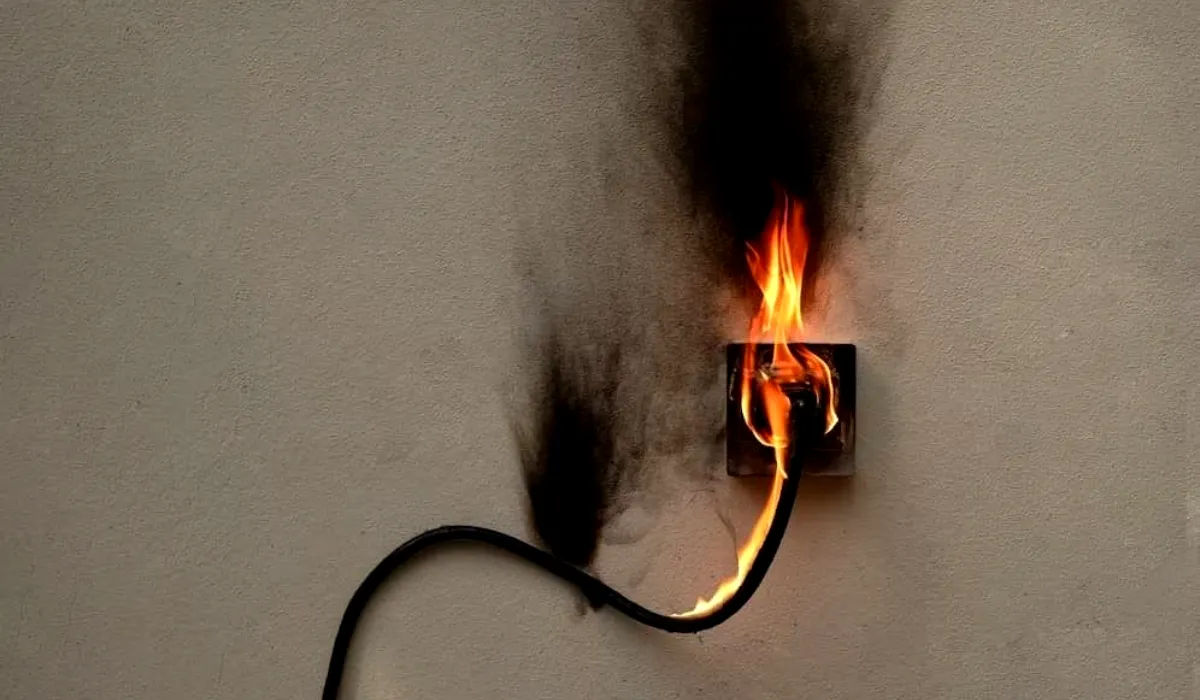
During a fire caused by Short circuit cable insulation and sheathing materials burn and release smoke. Thus it is the major cause of causalities in case of fire.
By performing a Smoke Density Test on cables, manufacturers can:
- Compare different insulation/sheathing compounds
- Develop low smoke & LSZH cables
- Meet project specifications
- Increase product safety
- Ensure Fire Safety Testing
- Pass certification and tenders
That’s why many applications now demand Low Smoke Zero Halogen (LSZH) or Low Smoke Flame Retardant (LSFR) cables.
What is ASTM D2843?
ASTM D2843 is an international standard titled:
Standard Test Method for Density of Smoke from the Burning or Decomposition of Plastics
What does ASTM D2843 measure?
This standard measures optical smoke density, based on:
- Amount of smoke produced by a sample
- Light transmission through smoke
- Reduction of visible light
- Maximum smoke density over time
It is commonly used to test:
- Plastics
- Rubber
- Insulation materials
- Cable compounds
- Polymeric construction materials

What Exactly is Measured During the Test?
Being a strict lab based test as per ASTM D2843, IS 13360-6-9. The Smoke Density Test Apparatus measures:
Key parameters
- Light Absorbance (%)
Percentage of light obstruction through the smoke - Maximum Smoke Density (%)
Highest density recorded during the test - Smoke Density Rating(%)
Area under the curve. Absorbance vs time graph - Smoke Density vs Time Curve
Graph showing smoke build-up pattern
These results help compare the performance of different materials.
Why Is Calibration Important Before the Test?
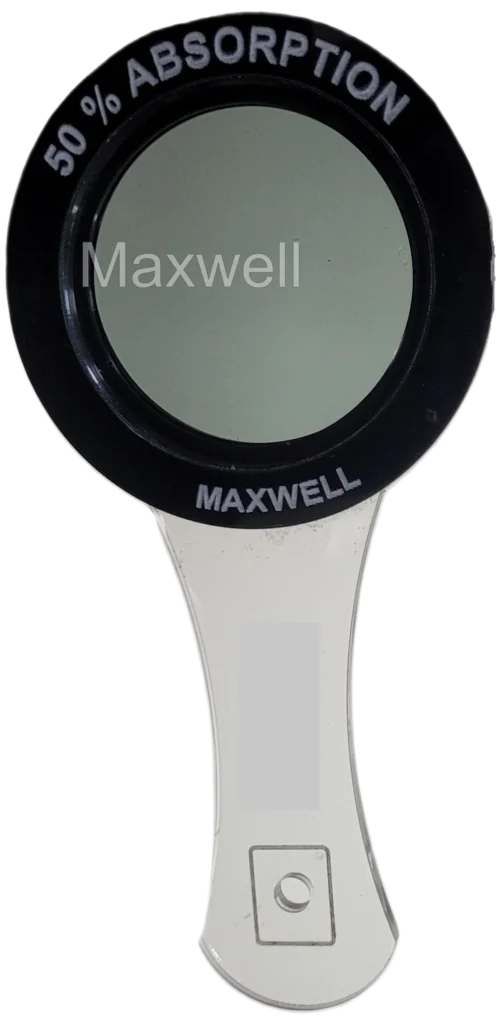
Calibration ensures accuracy of the optical system. There are different absorbance glasses available out of which the most widely acceptable is 50% Absorption glass.
What is calibrated in the system?
- Light source intensity
- Photocell/sensor alignment via 50% absorption glass
- Burner flame consistency
- Chamber cleanliness
- Software & data acquisition system
Calibration makes sure your test data is trustworthy and acceptable worldwide.
Step-by-Step Smoke Density Test Procedure
Standard Test Flow for Smoke Density Test Apparatus
- Prepare the sample
Material or cable is cut to specified size - Calibrate the system
Light source with sensors are aligned. Then Set zero & Set 100 procedure is done (refer Video for details) - Place sample inside chamber
On a metal grid with flame underneath - Ignite the burner
Controlled propane flame is applied - Smoke is generated
Burning/decomposition occurs - Light passes through smoke
Light beam → sensor → data system - Data logging starts
Recorded every few seconds - Graph and report generated
Max smoke density value obtained automatically via the data acquisition system
This entire procedure typically runs for 4 minutes.
Regulatory & Standards Compliance as per ASTM and IS (India)
Smoke density test results are required by:
- Government departments
- Infrastructure projects
- Metro / Railway / Airport authorities
- Building developers
- Fire safety consultants
- EPC contractors
Applicability Across Multiple Industries
Smoke density testing is used for much more than cables:
- Construction plastics & fittings
- Interior decorative panels
- Railway and aircraft components
- Marine & ship materials
- Electrical enclosures
- Public signage boards
- Polymer flooring & ceilings
- Aerospace Industry : Boeing, Airbus, Mc Donnell Douglas
Anywhere people gather indoors, smoke density matters.
Data Logging & Real-Time Measurement
Modern Smoke Density Test Apparatus offers:
- Real-time digital HMI display
- Automatic data logging
- Smoke density graphs
- Test reports generation
- USB / computer connectivity
- Software-based analysis
- Printer facility available
This reduces:
- Human error
- Manual calculations
- Reporting time
And increases:
- Test reliability
- Professionalism
- Laboratory efficiency
Smoke Density Test Apparatus – ASTM D2843 & IS 10810
A standard-compliant system typically includes:
- Stainless steel test chamber
- Propane burner system
- High accuracy light source
- Photocell / optical sensor
- Digital control panel
- Data acquisition & software
- Ventilation & safety features
It is an essential instrument for:
- Cable manufacturers
- Third-party testing labs
- R&D departments
- Quality assurance labs
- Universities & research centers
Why choose Maxwell’s Smoke Density Test Apparatus?
- Designed as per ASTM D2843, IS 13360-6-9 standard
- Trusted by labs & cable manufacturers in India & abroad
- Easy to operate
- Customizable + virtual technical support available
- Made in India 🇮🇳
- Used in railway, defence & EPC projects
Final Conclusion
Smoke is one of the deadliest elements of a fire. By controlling smoke production through proper testing, material selection, and standard compliance, many lives can be saved. Standards like ASTM D2843 and IS 13360-6-9 make it possible to scientifically evaluate material safety. If your business works with cables, plastics or polymer materials, a Smoke Density Test Apparatus is not just a testing instrument — it is a critical safety tool.
Sources: Federal Register Vol. 53 No. 165 / Federal Register Vol. 64 No.91 / ASTM Vol. 6 No. 4 “A History of Fire Testing” / FAA Fire Test Handbook, Chapter 6 / 49 CFR 238, Appendix B